Model-ready inputs
Standardize diagnoses, demographics, eligibility, and time periods for risk model execution.
Enterprise Application
Calculate, explain, and operationalize risk adjustment on the same trusted data foundation as the rest of your analytics.
Risk Adjustment connects diagnosis history, eligibility, demographics, and model logic in a transparent warehouse-native workflow.
Risk adjustment makes cost, utilization, and performance comparisons meaningful by accounting for differences in age, demographics, health status, and disease burden.
Tuva brings model inputs, condition categories, risk scores, and member-level detail into your warehouse so teams can validate the logic, trace results, and activate opportunities without relying on black-box exports.
Inside the application
01 / 03
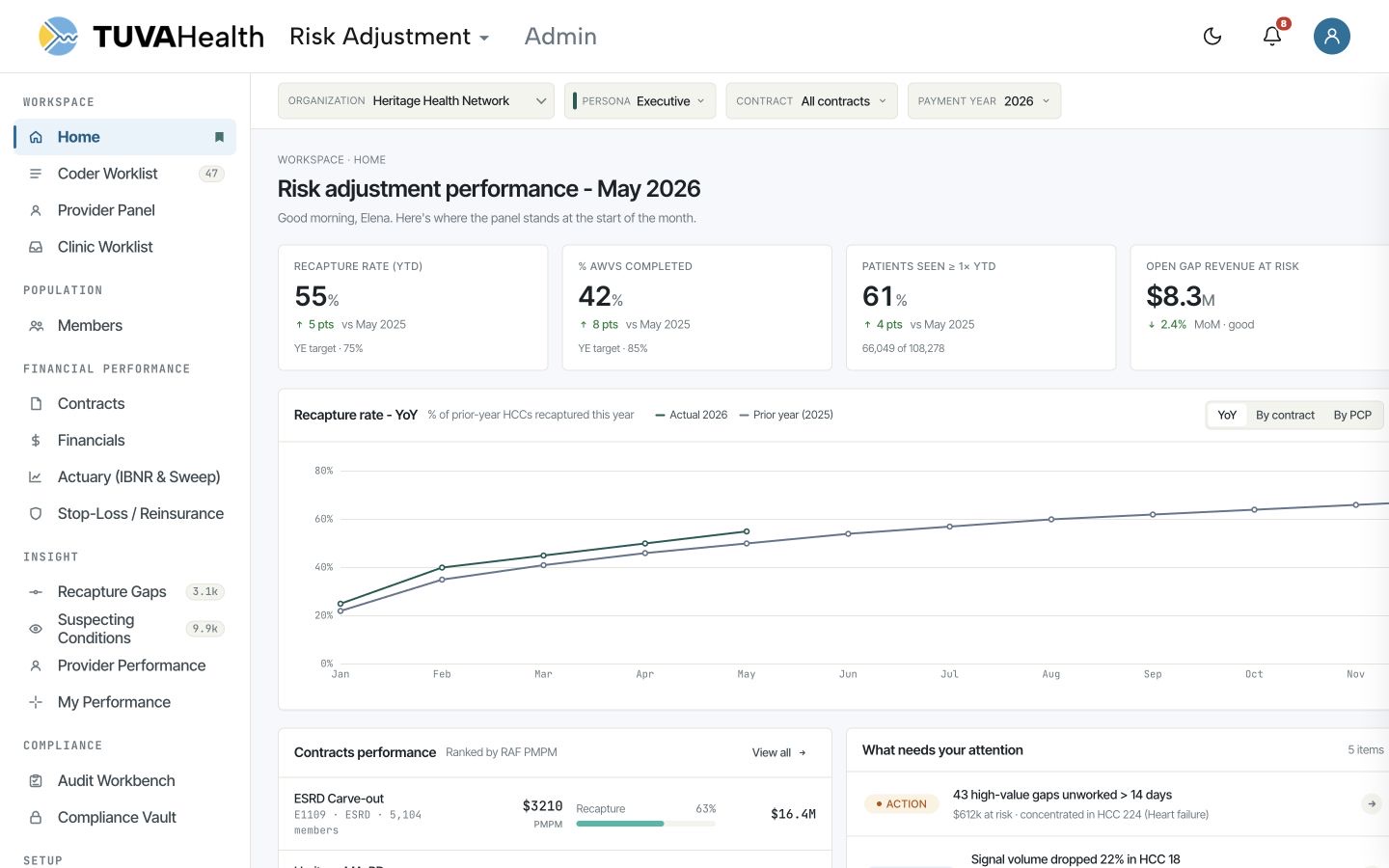
Monitor recapture, annual wellness visits, patient engagement, and open-gap revenue risk across contracts.
Population-level results remain connected to the gaps and signals that require action.
Application views
Use one controlled workflow for model calculation, validation, and downstream analytics.
Standardize diagnoses, demographics, eligibility, and time periods for risk model execution.
Inspect condition categories, coefficients, interactions, and member-level score contributions.
Identify recapture and documentation opportunities with the evidence behind each result.
Use adjusted populations for more meaningful cost, utilization, and quality comparisons.
Keep the path from clinical history to business action fully traceable.
Build model-ready eligibility, diagnosis, and demographic inputs from Core Platform.
Calculate risk outputs and inspect member-level factors, categories, and score contributions.
Publish adjusted analytics and opportunity lists to provider, finance, and operations teams.
Tell us which populations and risk models you manage today and we’ll map the application to your current workflow.